
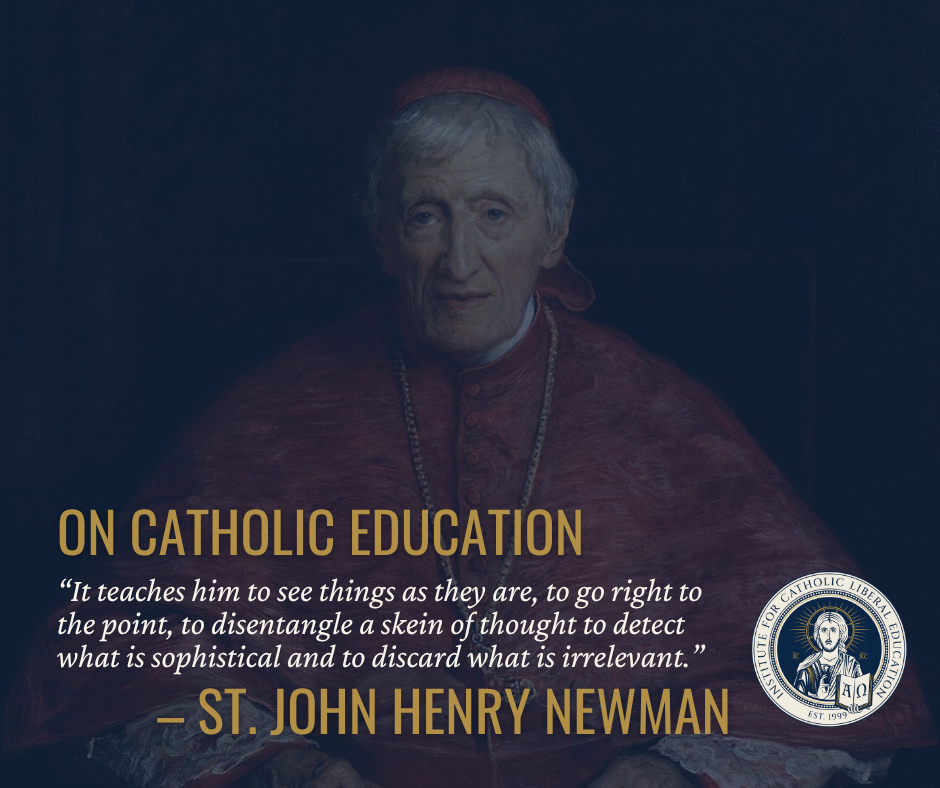
 On October 9, 1845, John Henry Newman was received into the Catholic Church. Two years earlier on September 25, 1843, the man who was to become a Catholic priest, then a Cardinal, and finally a Saint, preached his final sermon as an Anglican minister. The occasion was the dedication feast of St. Mary and St. Nicholas Church in Littlemore, a small village church he helped establish and build, and the sermon was aptly titled “The Parting of Friends.” It is a profoundly moving address that takes his congregation on a tour through biblical instances of heartbreaking departures, including the final goodbyes of Jacob, Ishmael, Naomi, and St. Paul, each illustrating the spiritual weight of separation. In the Introduction to Faith and Prejudice: Catholic Sermons of St. John Henry Newman, C. Stephen Dessain of The Oratory in Birmingham describes the congregation and their emotional reaction.
“The village children were there in new frocks and bonnets, a parting present from Newman, and the church overflowed with his friends, who knew they were listening to him for the last time. People sobbed audibly, and it is said that there was not a dry eye in the church. [Edward Bouverie] Pusey, who was the celebrant, was unable to control himself. Newman alone was calm, and Pusey described his sermon in a letter that same day:— ‘The sermon was like one of Newman’s, in which self was altogether repressed, yet it showed the more how deeply he felt all the misconceptions of himself. It implied, rather than said, Farewell” (C. Dessain, Introduction to Faith and Prejudice: Catholic Sermons of St. John Henry Newman).
It is always difficult, probably impossible, to summarize Newman without just quoting all of Newman. I will not try to do so here. If you have not read the “The Parting of Friends,” you will find it well worth your time. The entirety of the sermon is a masterpiece, but the final paragraph belongs in the annals of the greatest pieces of writing in the English language. It is literary, it is poetic, and it is deeply pious.
“And, O my brethren, O kind and affectionate hearts, O loving friends, should you know any one whose lot it has been, by writing or by word of mouth, in some degree to help you thus to act; if he has ever told you what you knew about yourselves, or what you did not know; has read to you your wants or feelings, and comforted you by the very reading; has made you feel that there was a higher life than this daily one, and a brighter world than that you see; or encouraged you, or sobered you, or opened a way to the inquiring, or soothed the perplexed; if what he has said or done has ever made you take interest in him, and feel well inclined towards him; remember such a one in time to come, though you hear him not, and pray for him, that in all things he may know God’s will, and at all times he may be ready to fulfil it.”
What humility and love it must have taken, in departing from the church he once led, to ask for their remembrance, their prayers, and for what? “That in all things he may know God’s will, and at all times he may be ready to fulfil it.” I have no doubt that this large Anglican assembly packed in the small country church would, with steadfastness and devotion, grant Newman his parting request, essentially praying him out of one congregation and into another. In time to come, their prayers would be joined to the entirety of the Church he was to join. The Catholic Church would, with the same steadfastness and devotion, pray him into another congregation, the Communion of Saints, where, as is only fitting, he now prays for all of us, that in all things we “may know God’s will, and at all times be ready to fulfil it.”
St. John Henry Newman, pray for us.